The Clock Broke and Then It Ran Faster
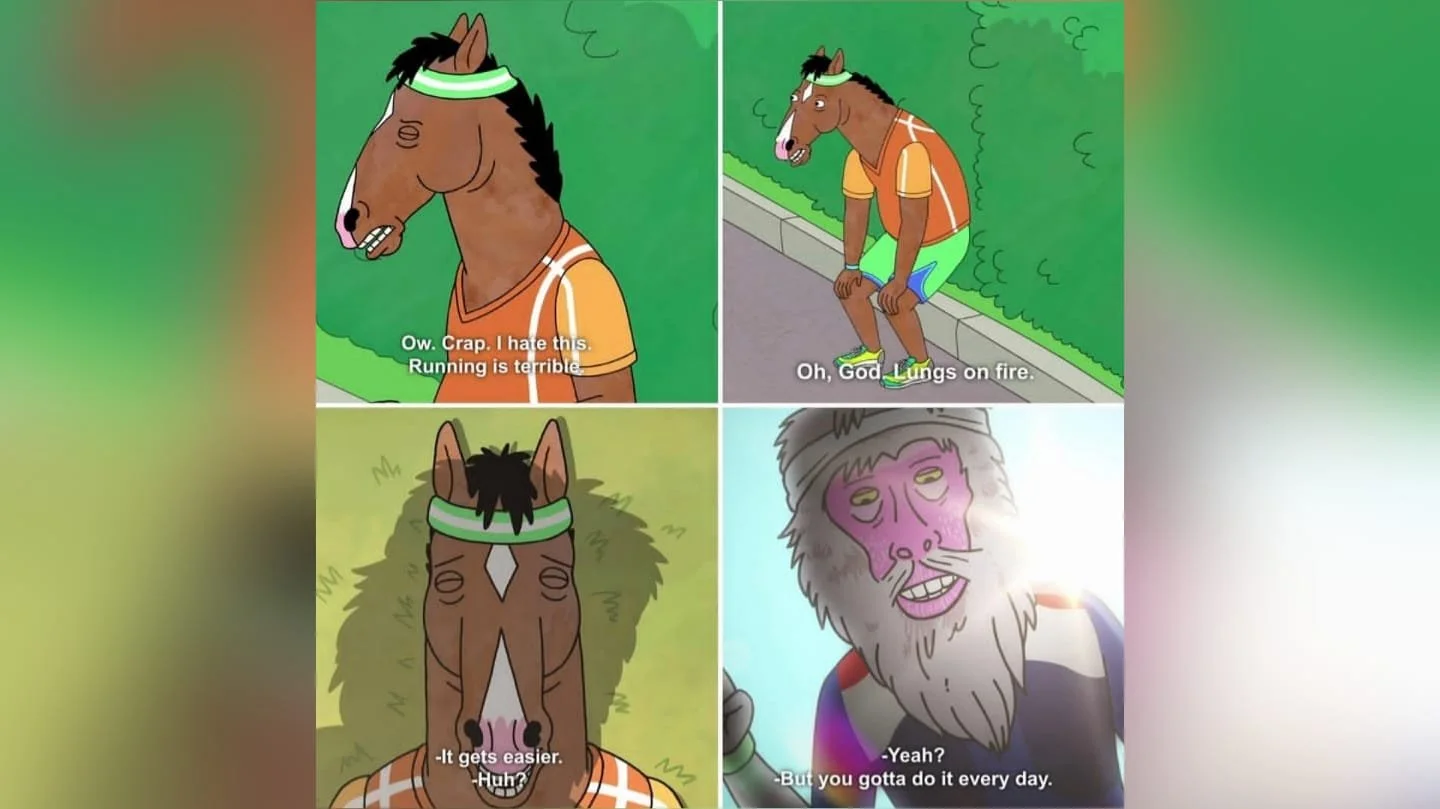
There's a story I read this week about a runner from Monterrey at the Boston Marathon. Months of preparation, weeks of up to 110 kilometers, sacrifices in diet, social life, sleep. All very calculated, very measured, very controlled.
And then, in the final kilometers, the clock broke.
She no longer knew her pace. She no longer knew if she was within her target time. All that was left was to run. And she ran her personal best.
I think we create the same way she ran those last kilometers: when we stop writing for the algorithm and write because something urgently needs to be said. When we stop designing for the imaginary client and design from what we believe is true. When we stop optimizing and simply do.
And yet there's enormous pressure — in creative industries, in business, in any space where someone produces something — to innovate. To be disruptive. To constantly reinvent yourself as if what you already know how to do had expired. As if staying in your lane were conformism dressed up as fear.
But maybe innovating doesn't always look like a radical turn. Sometimes it looks like continuing to do the same thing with more clarity. Pivoting when circumstances change — not because you planned it, but because you knew how to read the moment. Responding instead of controlling.
I'm not saying effort doesn't matter. The preparation mattered. The 110 weekly kilometers mattered. But the record didn't arrive when everything was under control. It arrived when what was left was to let go.
The problem is that flow doesn't look productive. It doesn't generate a report. It has no deliverable. And in a world that values what can be measured, flow feels like wasting time.
But maybe that's exactly where what nobody else is doing lives.
What would you be doing differently if you couldn't measure whether it was working?